Top Signs You Need Gate Repair Service — Don’t Ignore These
A gate that hesitates for two seconds before opening isn’t just being slow; it’s telling you the motor is drawing excess current to overcome a drag it shouldn’t have to fight. This is how a minor issue, like a worn roller that could cost under $100 to replace, can escalate into a burnt-out motor costing $600 or more if ignored. Many homeowners in North Las Vegas normalize these small symptoms, mistaking them for normal wear and tear, but these are actually critical mechanical distress signals that point directly to impending component failure. Understanding these signs early is key to avoiding costly emergency repairs and maintaining your gate’s security and functionality.
When Your Gate Starts Acting “Intermittently” — That’s Worse Than a Full Stop
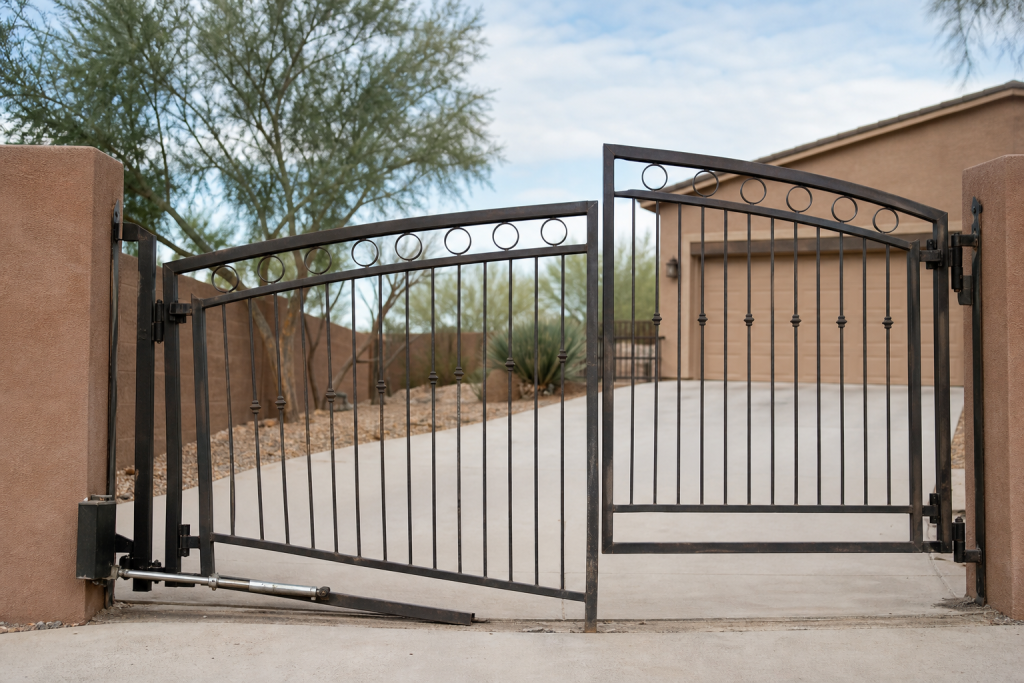
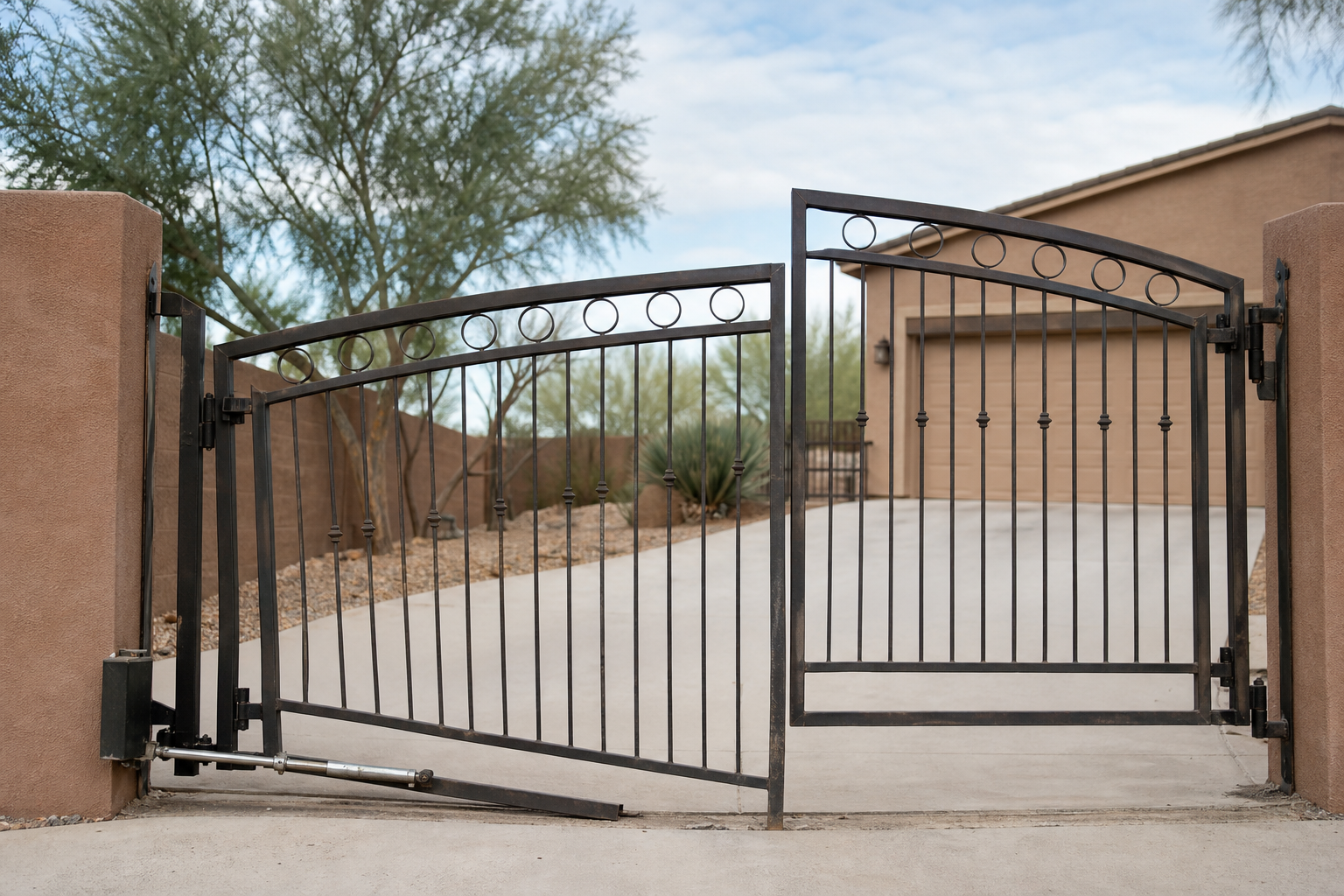
It might seem counterintuitive, but a gate that works most of the time but occasionally falters is often in a more urgent state of disrepair than one that has completely stopped functioning. This intermittent behavior in North Las Vegas gate systems typically signals a component that is nearing its breaking point but still has enough residual strength or luck to engage. For instance, a motor that struggles to lift the gate on a hot day, but works fine on a cool morning, is experiencing increased resistance. This resistance could be due to a bent track, a seized roller, or even a failing gearbox. These are the symptoms that lead to sudden, catastrophic failures. When your gate is working, it’s under normal load. When it’s struggling, it’s under extreme stress, and that’s when components fail. We often see systems in neighborhoods like Desert Rose where consistent, minor drag has overloaded the motor over time, leading to an unexpected shutdown.
Think about it: if a component fails every single time, you know it’s broken and you’ll likely call for service. But if it works 8 out of 10 times? You might push it off. That 80% success rate is a ticking clock. It means the underlying problem is getting progressively worse with each of those two failures. We’ve seen this play out countless times with LiftMaster and Mighty Mule systems; homeowners delay calling because “it’ll probably work tomorrow,” only to find themselves locked out or with an inoperable gate on a busy morning.
Translating Gate Noises: Grinding, Clicking, and Squealing
Your gate doesn’t just break silently; it often announces its distress through a symphony of concerning sounds. Learning to distinguish these noises can help you pinpoint the problem before it becomes a major repair. A loud grinding sound, for example, is almost always indicative of metal-on-metal friction, often caused by a roller that’s off its track, a damaged gear in the motor, or a gate that’s dragging heavily against the ground. In North Las Vegas, where we experience significant temperature fluctuations, metal components can expand and contract, sometimes causing rollers to become lodged or tracks to warp slightly, leading to this grinding.
Clicking sounds can be more varied. They might indicate that the gate’s limit switches are being engaged prematurely, meaning the gate thinks it has reached its fully open or closed position when it hasn’t. Alternatively, a rapid clicking can sometimes be the sound of a motor trying to engage but failing, perhaps due to a stripped gear or a problem with the internal clutch mechanism. Squealing, especially when the gate is in motion, is usually a sign of dry or failing bearings in the rollers or the motor shaft. This is similar to a car wheel bearing going bad. We often recommend a monthly lubrication of moving parts, especially for systems like Viking or Linear, to prevent these squeals from developing.
Here’s a quick breakdown of what common gate noises might mean:
- Grinding: Likely a physical obstruction, damaged roller, bent track, or motor gearbox issue.
- Clicking: Could be limit switch problems, a motor struggling to engage, or internal gear damage.
- Squealing: Usually points to dry or worn bearings in rollers or motor components.
- Banging/Clanking: Often suggests loose parts, a gate that’s hitting something, or severe internal damage.
Visual Clues Specific to North Las Vegas Conditions
Living in North Las Vegas means dealing with unique environmental factors that can accelerate gate wear and tear. Understanding these local conditions can help you spot problems early. For instance, the arid climate and dust can wreak havoc on moving parts, while intense sun can degrade seals and plastic components. Rust patterns are a particularly telling visual sign. On a metal gate, you’ll see surface oxidation, which is cosmetic. However, if you notice rust blooming heavily from a joint or weld line, it’s a strong indicator of structural compromise – the metal itself is deteriorating from the inside out. This is common on older gates or those that haven’t been properly maintained, especially on iron or steel components exposed to infrequent but intense moisture.
Another sign to watch for, particularly on gate tracks, is the accumulation of caliche, a common soil type in our region. Caliche can harden and act like concrete, creating significant drag on rollers. Unlike a simple dirt clog, caliche crust requires specialized cleaning and can indicate that the track itself may be uneven or damaged, causing the material to build up excessively. We’ve had to tackle this specifically in areas like Aliante, where the native soil composition can be challenging. Similarly, look for any signs of the gate’s frame or panels becoming warped or sagging, which can be exacerbated by extreme heat and can put undue stress on the motor and hinges.
Pay attention to these local visual cues:
- Rust Bloom at Welds/Joints: Indicates structural rust, not just surface oxidation.
- Caliche Buildup on Rollers/Tracks: Suggests excessive friction and potential track damage.
- Sagging or Warped Panels: Can strain the entire gate system, especially in heat.
- Cracked or Faded Plastic Components: The sun’s UV rays can make parts brittle and prone to breaking.
The Security Risk of a Gate That Closes But Doesn’t Latch
A gate that closes, or at least appears to, but fails to properly latch is not merely an inconvenience; it’s a significant security vulnerability. This is a critical sign that your gate system is not performing its primary function: securing your property. In North Las Vegas, where property security is paramount, ignoring this issue is a risk you don’t want to take. The most common culprit for a gate that doesn’t latch is a problem with the physical latch mechanism itself, or the gate’s alignment. This could be a bent or misaligned strike plate, a worn or broken latch bolt, or even an issue with the gate’s travel limit, preventing it from reaching the fully closed and latched position.
If you have an automated gate, the issue could also stem from the opener’s programming or the physical engagement of the latching mechanism. For example, a DoorKing or FAAC system might have a sensor indicating closure, but the physical bolt or lock isn’t engaging. This often happens when the gate has settled, or the track has shifted slightly, causing the gate to stop just shy of its fully engaged position. We’ve seen this in older installations in neighborhoods like The Lakes, where foundation shifts can subtly alter gate alignment over time. Don’t assume a gate that has stopped moving is just a mechanical hiccup; if it doesn’t securely latch, it’s a security breach waiting to happen.
A gate that doesn’t latch poses these risks:
- Unauthorized Entry: Anyone can push the gate open.
- Animal Escape: Pets can easily wander out.
- Increased Vulnerability: Makes your property an easier target for theft or vandalism.
- False Sense of Security: You think your property is secure when it’s not.
The Monthly Safety Sensor Test: A Simple but Vital Check
Gate safety sensors are crucial for preventing accidents, especially in households with children or pets. While they might seem like a minor component, their failure can have serious consequences. Many homeowners in North Las Vegas never think about their safety sensors until they’re involved in an incident or the gate stops working altogether. A proactive approach means testing them regularly. A simple monthly test is sufficient. To perform this test, place an object, like a broomstick or a large box, in the path of the closing gate. The gate should immediately reverse its motion upon encountering the obstruction. If it continues to close, or doesn’t reverse smoothly, your safety sensors are not functioning correctly, and this is a critical sign you need gate repair service.
Even before a complete failure, you might notice subtle signs. For instance, the sensors might become more sensitive to ambient light or minor environmental changes, causing the gate to reverse unexpectedly for no apparent reason. This “oversensitivity” is a precursor to total failure. For systems like Ghost Controls or Elite, ensuring the lenses of these sensors are clean and unobstructed is also vital, as dust and debris can mimic an obstruction or block the beam entirely. We often find that a quick wipe-down with a microfiber cloth can resolve minor sensor issues, but if the gate still fails the obstruction test, it’s time to call in the professionals. Don’t wait for a near-miss or a full sensor burnout.
Perform this safety sensor test monthly:
- Close the gate slowly.
- Place a firm object (e.g., broom handle, cardboard box) in the gate’s path.
- The gate should immediately stop and reverse.
- If it doesn’t reverse, or reverses weakly, call for service.
The Bottom Line
Don’t let minor gate annoyances turn into major, expensive problems. Recognizing the signs of wear and tear early, from strange noises to intermittent operation, is your first line of defense in maintaining a secure and functional gate system. These aren’t just quirks; they’re indicators that a component is under stress and nearing failure. For homeowners in North Las Vegas, understanding these warning signs, especially those influenced by our local climate, can save you significant time and money.
If you’re in North Las Vegas and need help identifying or addressing these gate issues, Secure Gate Repair Services offers free estimates. Call us today at (725) 600-0918 to ensure your gate is operating safely and reliably.
Frequently Asked Questions
A grinding noise typically indicates metal-on-metal friction, often from worn rollers, a damaged track, or a problem within the gate motor’s gearbox. A clicking noise can point to issues with the gate’s limit switches, a motor struggling to engage, or internal gear problems within the opener. Both require attention, but grinding often signifies more immediate mechanical damage.
For minor issues like lubrication of squeaky hinges or rollers, DIY is possible. However, if you hear grinding, clanking, or if the gate is exhibiting intermittent behavior or not latching, it’s best to call a professional. Issues like worn-out motor gears, bent tracks, or structural weld problems require specialized tools and expertise that Secure Gate Repair Services provides.
We recommend lubricating the moving parts of your gate, including rollers and hinges, at least twice a year, or more frequently if you notice squeaking. In North Las Vegas’s dry climate, lubrication is crucial for preventing wear and tear, especially on systems from brands like Viking or Linear. Keeping these parts clean and lubricated can prevent many common noises and extend the life of your gate system.
A gate that closes but doesn’t latch is a significant security concern and requires immediate attention. The most common causes are a misaligned latch mechanism, a worn latch bolt, or issues with the gate’s travel limit switch preventing it from reaching the fully engaged position. For automated gates, the opener itself might not be properly engaging the latch. You should absolutely be worried, as this leaves your property vulnerable. Call Secure Gate Repair Services at (725) 600-0918 for a prompt assessment and repair.
Reviewed by Justin Bryant, Owner & Lead Technician at Secure Gate Repair Services, serving North Las Vegas since 2021.
Need Gate Repair Help?
Call Secure Gate Repair Services — licensed & insured, here with fast after-hours help in Nellis Air Force Base.
(725) 600-0918